TensorDictBase.save#
- TensorDictBase.save(prefix: str | None = None, copy_existing: bool = False, *, num_threads: int = 0, return_early: bool = False, share_non_tensor: bool = False, robust_key: bool | None = True, archive: bool | None = None, compression: str | int | None = None) Self#
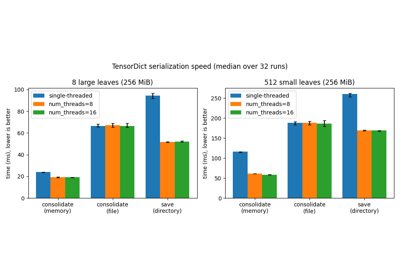
Saves the tensordict to disk, and returns a memory-mapped copy of it.
save(and its aliasdumps) ismemmap(): it takes the same arguments.selfis not changed. Read the result back withload(). See Save and load tensordicts.- Parameters:
prefix (str or Path) – the directory where the tensordict is written, one file per leaf. If
prefixends with".tdz"orarchive=True, a single archive file is written instead.- Keyword Arguments:
All the other arguments are those of
memmap().Examples
>>> import tempfile
>>> import torch
>>> from tensordict import TensorDict
>>> td = TensorDict(a=torch.zeros(3), nested=TensorDict(b=torch.ones(3), batch_size=[3]), batch_size=[3])
>>> with tempfile.TemporaryDirectory() as path:
...     _ = td.save(path)
...     loaded = TensorDict.load(path)
...     print((loaded == td).all())
True
Every tensordict class and every tensorclass has this method. For the other methods, see Methods by task.